
When a product hurts you instead of helping you, everything feels upside down.
Medical bills pile up. Work becomes harder. The company seems distant and protected.
That’s exactly when a product liability lawyer can make a real difference.
This kind of lawyer helps injured people hold manufacturers and sellers accountable.
They know how big companies and insurance carriers fight these cases.
They also know how to gather proof, deal with experts, and negotiate fair settlements.
This article walks through how these cases work in the United States.
It also explains what a product liability lawyer actually does, and how to choose one.
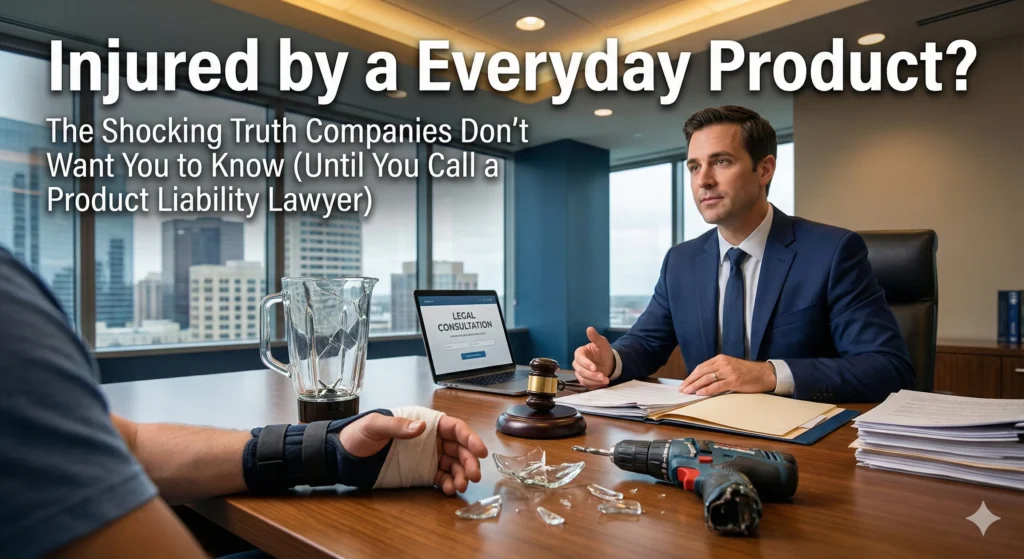
(Suggested image: A person meeting with a lawyer, broken product on the desk. Alt text idea: “Injured consumer speaking with a product liability lawyer about a defective product case.”)
What Is a Product Liability Lawyer?
A product liability lawyer focuses on injuries caused by unsafe products.
Those products can be almost anything sold in the U.S. market.
Common examples include:
- Cars and tires with hidden defects
- Dangerous medications or medical devices
- Exploding e-cigarettes or batteries
- Defective power tools or lawn equipment
- Children’s toys that choke, break, or contain toxins
- Household appliances that catch fire or shatter
According to the U.S. Consumer Product Safety Commission (CPSC), millions of Americans visit emergency rooms each year due to consumer products. You can explore those injury trends on cpsc.gov, which tracks recalls and hazard data.
A product liability lawyer helps you figure out three main questions:
- Was the product defective or unreasonably dangerous?
- Did that defect directly cause your injury?
- Who in the supply chain can be held legally responsible?
Common Types of Dangerous Product Cases
Most product cases fall into three main buckets:
- Design defects
The product is dangerous even when made correctly.
Example: A SUV with a top-heavy design that rolls over too easily. - Manufacturing defects
Something went wrong during production or assembly.
Example: A batch of pressure cookers with weak seals that explode. - Failure to warn / Inadequate warnings
The product lacked proper instructions or safety warnings.
Example: A chemical cleaner without clear eye protection warnings.
Different states use different legal standards.
Some follow “strict liability,” which can make the company responsible even without proving negligence.
Others lean more heavily on negligence rules.
An experienced product liability lawyer knows which standard applies in your state.
Real-World Example: From Broken Blender to Legal Claim
Imagine you buy a name-brand blender at a big-box store.
You follow the instructions exactly.
Halfway through making a smoothie, the glass jar shatters.
Sharp glass hits your face and hand.
You need stitches and later miss a week of work.
Here is how a product liability lawyer might handle that case:
- They get photos of the shattered blender and your injuries.
- They preserve the actual blender as evidence, unwashed and untouched.
- They request your medical records and bills.
- They check whether that blender has any recalls on the CPSC website.
- They hire an engineering expert to analyze the design and glass strength.
- They identify all possible defendants: manufacturer, distributor, maybe retailer.
- They deal with the insurance adjusters so you don’t have to.
If the expert finds a design flaw, the case may involve many victims.
It might even grow into a class action or multi-district litigation.
Your lawyer would explain those options and how they affect your payout.
How a Product Liability Lawyer Builds Your Case
A strong case is built step by step.
From reading many real cases, one pattern stands out.
The best results usually come when evidence is preserved early and carefully.
Step 1: Free Consultation and Case Screening
Most product liability attorneys offer free initial consultations.
This is where you explain what happened and share any documents.
They might ask:
- When and where you bought the product
- How you used it before the injury
- Whether anyone else saw what happened
- Whether you still have receipts, packaging, or manuals
They use this call to decide if your claim is worth full investigation.
You can also use it to decide if you trust them.
Step 2: Investigation, Experts, and Evidence
If they take your case, investigation starts.
A product liability lawyer often:
- Sends “preservation letters” to stop companies destroying evidence
- Collects medical records, employment records, and insurance statements
- Works with engineers, doctors, and safety experts
- Researches prior lawsuits and known complaints about that product
According to Investopedia, product liability cases often turn on expert testimony and technical evidence, which can get expensive very quickly. A good lawyer should be upfront about this.
In many firms, the lawyer advances these expert costs.
They get reimbursed from the final settlement or judgment.
Costs and Fees: What Hiring a Product Liability Lawyer Really Costs
Most injured consumers worry first about money.
That’s completely understandable, especially with U.S. healthcare costs.
The good news: many product liability lawyers work on a contingency fee.
You pay nothing upfront.
They take a percentage if they win or settle.
Here’s a simple comparison:
| Feature (USA) | Contingency Fee Product Liability Lawyer | Hourly-Billing Lawyer |
|---|---|---|
| Typical upfront cost | $0 | Retainer: $2,000–$10,000+ |
| How fees are charged | % of settlement or verdict | Hourly rate, often $250–$600+ |
| Common percentage or rate | Usually 33%–40% of recovery | Billed monthly or as work done |
| Who pays experts and court costs first | Usually the law firm | Usually the client |
| Best for | Injured people with limited savings | Businesses or very wealthy clients |
Always ask for the fee agreement in writing.
Read it slowly.
Ask about:
- What happens if the case loses
- Whether the percentage changes if the case goes to trial
- How expenses like experts, filing fees, and travel are handled
According to NerdWallet, legal costs can vary wildly across the United States.
Clear communication about fees is one of the best trust indicators.
How to Choose the Right Product Liability Lawyer in the U.S.
Picking the right lawyer is part legal decision, part gut feeling.
You want both skill and a personality you can work with.
Questions to Ask During Your First Call
Here are smart, practical questions:
- How many product liability cases have you personally handled?
- Have you handled cases involving this type of product before?
- Do you usually represent injured consumers or corporations?
- How often do you actually go to trial?
- Who will handle my case day to day, you or an associate?
- How will you update me on progress? Email, phone, online portal?
You can also check:
- State bar websites for discipline history
- Online reviews, looking for patterns, not one-off complaints
- Whether they publish results or case studies (many do, with permission)
Under U.S. law, statutes of limitations can be short.
Many states give only one to three years for injury claims.
Don’t wait too long to at least talk with a lawyer.
FAQs About Product Liability Lawyers and Defective Products
1. What does a product liability lawyer actually do for me?
A product liability lawyer investigates your injury and the product that caused it.
They gather evidence, hire experts, and identify all potentially responsible companies.
They handle negotiations with insurers and opposing lawyers.
If necessary, they file a lawsuit and take your case to trial.
2. When should I contact a product liability attorney after an injury?
Contact a product liability attorney as soon as you are medically stable.
Early contact helps preserve evidence, including the product and packaging.
It also helps meet your state’s statute of limitations.
Waiting months can make it harder to prove what really happened.
3. Do I need to keep the defective product for my case?
Yes, if at all possible, keep the product exactly as it is.
Do not throw it away or try to fix it.
Store it in a safe, dry place, and avoid using it again.
Your lawyer and their experts may need to inspect and test it.
4. How much can I recover in a defective product lawsuit?
It depends on your specific injuries and facts.
Typical damages include medical bills, future treatment, lost wages, and pain.
Some states also allow punitive damages in extreme misconduct cases.
There is no fixed average, but serious cases can reach six or seven figures.
5. Can I afford a product liability lawyer if I’m already in debt?
In many situations, yes.
Most product liability lawyers in the United States use contingency fees.
That means no upfront payment and no attorney fee if they lose.
You should still ask how costs are handled, so there are no surprises later.
(This article provides general information for U.S. readers and is not legal advice. Always speak with a licensed attorney in your state about your specific situation.)