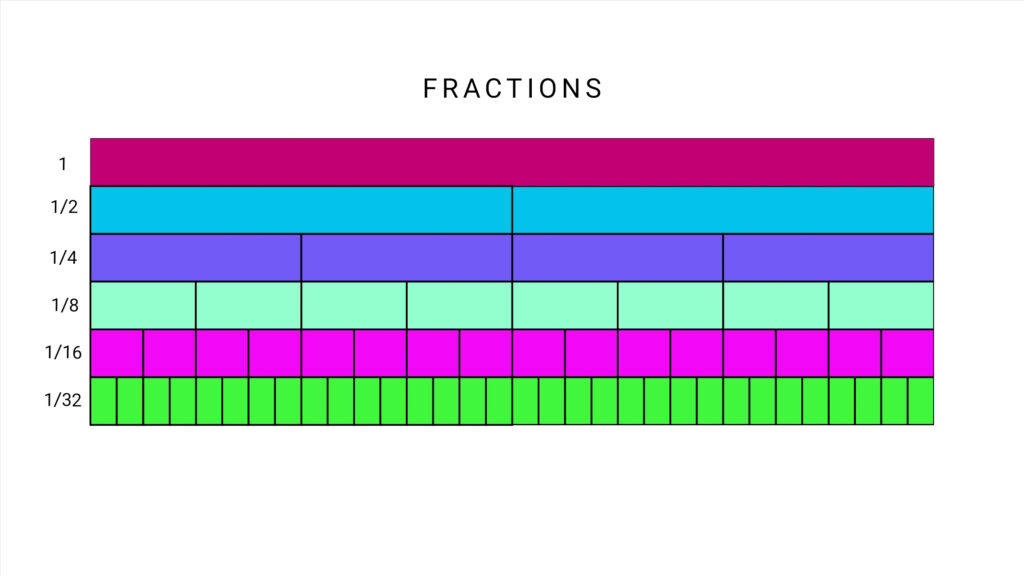
Quick answer: Use AI to ask questions, offer small hints and create practice—not to complete the thinking for you. Check your course rules first, attempt each problem yourself, verify feedback against approved material, then solve a similar problem without AI. Treat that independent attempt as your learning check.
1. Check permission and protect your information
Before opening an AI tool, check the assignment instructions and your school’s guidance. Ask your educator if the boundary is unclear:
- Is AI allowed for revision, this assignment, or neither?
- Are hints permitted when generated answers are not?
- Must I disclose its use or retain the conversation?
- Which tools and learning materials may I use?
A useful question is: “May I use AI to generate extra practice questions from this lesson, without using it to answer the assessed questions?”
Keep privacy separate from permission. For this workflow, use fictional examples and material you are allowed to share. Leave out names, student IDs, grades, private feedback and classmates’ work. Do not upload an entire course pack simply because a tool accepts files.
UNESCO’s guidance calls for human-centred, age-appropriate educational use, protection of personal data and institutional evaluation of tools. For younger learners, use a school-approved approach with appropriate adult oversight rather than assuming independent chatbot use is suitable. (unesco.org)
You need no special subscription for the activities below. If AI is prohibited or unavailable, use the same question-and-practice routine with a teacher, classmate or textbook.
2. Separate assisted performance from actual learning
Finishing a worksheet with help and understanding its method are different goals.
A 2025 high-school mathematics field experiment compared ordinary instruction with two AI-supported approaches. AI access improved performance during assisted practice. But when access was removed, students using the less restricted assistant performed worse than the control group. A tutor incorporating teacher-designed hints and safeguards largely avoided that disadvantage; it did not demonstrate a clear advantage over the control group on the unassisted exam. (doi.org)
This does not establish that every chatbot harms learning or that every hint-based tutor works. It studied a particular setting, system design and short-term assessment. Nor is typing “give me hints” equivalent to the study’s tutor, which included problem-specific teacher input. (doi.org)
Other learning research offers useful principles:
- Retrieval practice means trying to recall information without looking. Roediger and Karpicke’s experiments found that recalling studied passages supported better delayed retention than repeated study under the tested conditions. These were not AI experiments. (psychologicalscience.org)
- Self-explanation means explaining why an idea or step makes sense. A small study by Chi and colleagues found greater learning gains among students prompted to explain a science passage than among students who reread it. This also did not test AI tutoring. (education.asu.edu)
The practical recommendation here combines those principles: make an attempt, explain it, check it, and try again independently. It is a study routine, not a guarantee of improved grades.
3. Request the smallest useful hint
Start on paper. Write what you know and identify the exact point where you become unsure.
Instead of asking:
Solve this fractions question and explain the answer.
Try:
I am practising adding fractions. I will attempt the question first. After I share my working, ask one question about my next step. Do not give the final answer. If I remain stuck, offer one small hint and wait.
Include your attempt, even if incomplete. “I think I need matching denominators, but I do not know which number to choose” gives a clearer starting point than “I don’t understand fractions.”
Use this suggested help ladder:
- Ask for a question that directs your attention.
- Request one hint about the next step.
- Ask for a simpler, different example.
- If necessary, consult a worked solution in your approved material.
You do not need to remain stuck indefinitely. The aim is to preserve a meaningful attempt, not refuse all instruction.
If the chatbot reveals the answer anyway, stop reading. Set that question aside and use a fresh one for your independent check.
4. Work through a fractions example
Consider this original practice question:
What is 1/2 + 1/3?
Suppose your first attempt is:
“I added the top numbers and the bottom numbers, so I got 2/5.”
A useful hint request would be:
My attempt is 2/5. Do not solve the question. Ask me to check whether that answer is reasonable.
A suitable teaching question would be: “When you add a positive amount to 1/2, should the result be greater or smaller than 1/2?” This is an illustrative question, not a recorded chatbot response.
Because 2/5 is smaller than 1/2, the proposed answer fails that check.
Now return to the lesson’s method:
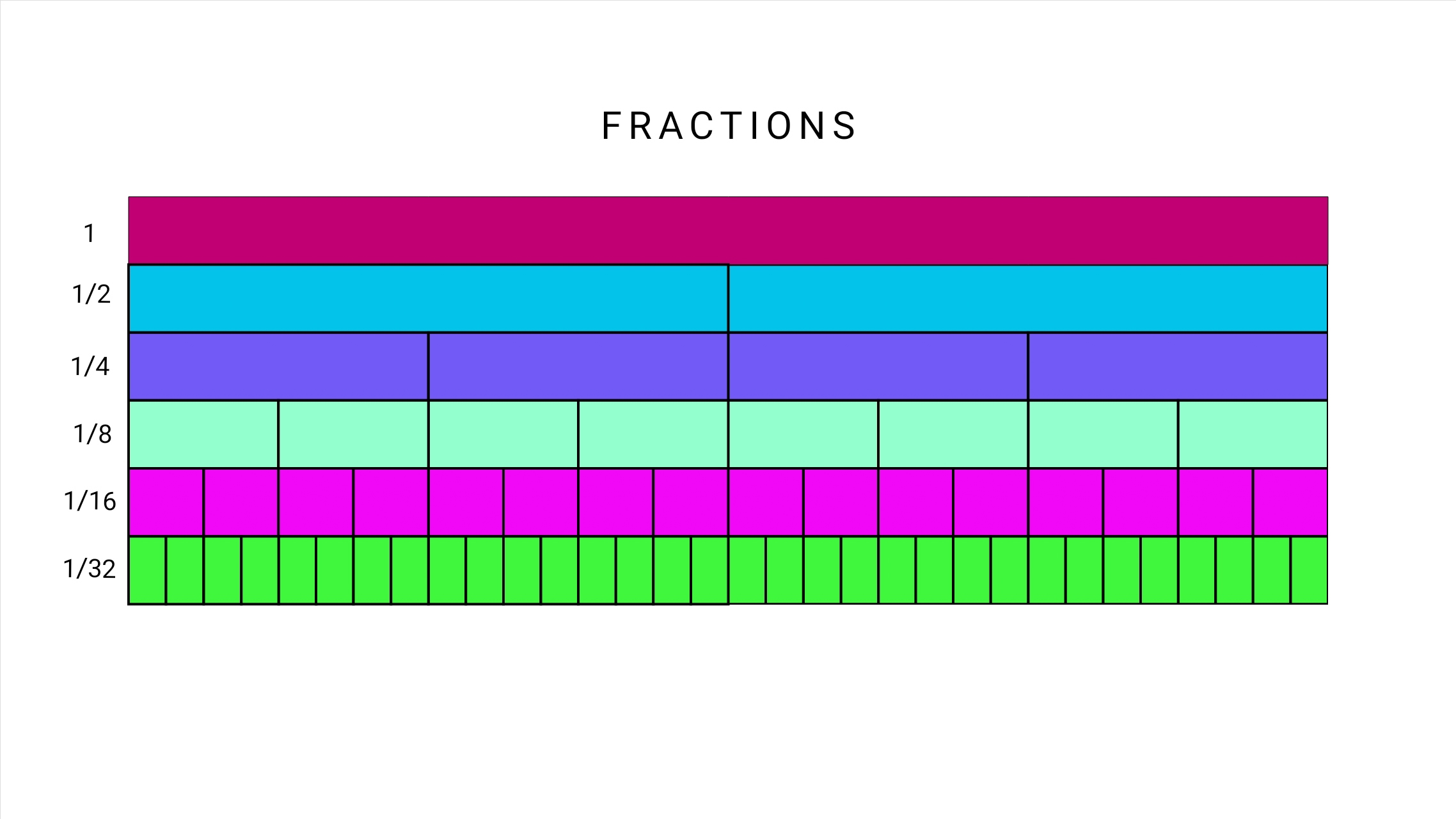
- Find equal-sized parts. Halves and thirds can both be expressed as sixths.
- Rewrite each fraction without changing its value.
1/2 = 3/6, and 1/3 = 2/6. - Add the equal-sized parts.
3/6 + 2/6 = 5/6. - Check the size.
The result is greater than 1/2 and less than 1, as expected.
The denominator names the size of each part; the numerator counts those parts. You cannot directly count halves and thirds as though they were the same size.
For a paper check, draw two identical rectangles. Divide each into six equal pieces. Shade three pieces in one and two in the other. Together, the shaded amounts equal five sixths of one rectangle.
Then hide the solution and try a different question. Recopying these steps is not the independent check.

5. Explain the reasoning before requesting feedback
Close the worked example and explain the method in your own words.
For instance:
“I changed both fractions into sixths so that the pieces were the same size. I changed the top and bottom of each fraction by the same factor, so its value stayed the same. Then I counted the sixths.”
Do not aim for polished wording. Aim for an explanation you can defend.
Then ask:
Here is my explanation. Identify one unclear or incorrect idea. Do not rewrite it for me. Ask one follow-up question that I should answer myself.
Follow-up questions might include:
- Why does 1/2 equal 3/6?
- Why does the denominator stay six when adding 3/6 and 2/6?
- Could you use twelfths instead? Why?
These prompts adapt the self-explanation approach: the learner supplies the reasoning rather than merely receiving an explanation. The supporting research does not establish that chatbot feedback itself improves this process. (education.asu.edu)
If feedback conflicts with your lesson, keep both versions and ask your educator which reasoning is correct.
6. Generate practice from approved material
Choose a narrow learning objective, such as adding positive proper fractions with different denominators. A proper fraction has a numerator smaller than its denominator.
Provide a short, shareable lesson summary or a learning objective you wrote yourself. Then use a prompt such as:
Using only the scope below, create four practice questions on adding positive proper fractions. Include one same-denominator question, two different-denominator questions and one incorrect solution for me to diagnose. Keep every total below one. Give questions only; withhold answers until I submit my attempts. If the scope is insufficient, ask me rather than adding new topics.
Treat the result as a draft. Before practising, check whether each question:
- Matches the lesson and requested difficulty.
- Contains enough information.
- Follows the stated constraints.
- Avoids introducing an unfamiliar method.
Educators can use the same process to draft practice sets, but should independently solve the questions and review explanations before distributing them. Keep the answer key separate so learners can attempt retrieval before seeing a solution.
Do not assume the generated answer key is correct merely because it accompanies the questions. AI output needs independent checking. (guides.library.ubc.ca)


7. Verify answers and catch common mistakes
Use this routine before accepting AI feedback:
- Recalculate independently. Work from the question, not from the chatbot’s answer.
- Check against an approved reference. Compare the method with your lesson, textbook or teacher-provided solution.
- Use another representation. For fractions, try a drawing, number line or size estimate.
- Check any source directly. Open a cited document and confirm that it exists and supports the claim.
UBC Library warns that generative AI can produce convincing invented citations. Its guidance recommends corroborating claims and checking the actual sources, rather than trusting citation-shaped text. (guides.library.ubc.ca)
Watch for these practical mistakes:
| Mistake | Better check |
|---|---|
| Reading a solution before attempting the problem | Write your first step before requesting help. |
| Accepting “correct” without reasons | Check the working against your lesson. |
| Asking another chatbot to settle a disagreement | Use an independent reference or ask your educator. |
| Letting AI rewrite your explanation | Request a question, then revise it yourself. |
| Treating fluent wording as understanding | Solve a fresh problem with the chat closed. |
If a contradiction remains unresolved, mark it as uncertain. Do not turn uncertain feedback into a memorised rule.
8. Finish with an unaided practice exercise
Close the chat and put the worked example out of sight. Complete these tasks on paper:
- Calculate 1/4 + 1/2.
- Calculate 1/3 + 1/6.
- A learner writes 1/2 + 1/4 = 2/6. Explain the mistake without simply giving the correct answer.
- Explain why multiplying both the numerator and denominator by the same nonzero number preserves a fraction’s value.
For each calculation, show a common denominator and include a drawing or size check.
Before checking: Which step can you explain confidently? Where are you guessing? Write that down.
Only then use your approved lesson or ask an educator to check the work. If you made an error, identify the first incorrect step and attempt a new question of the same type.
Your final question is not “Did AI help me finish?” It is “What can I now explain and do without it?”