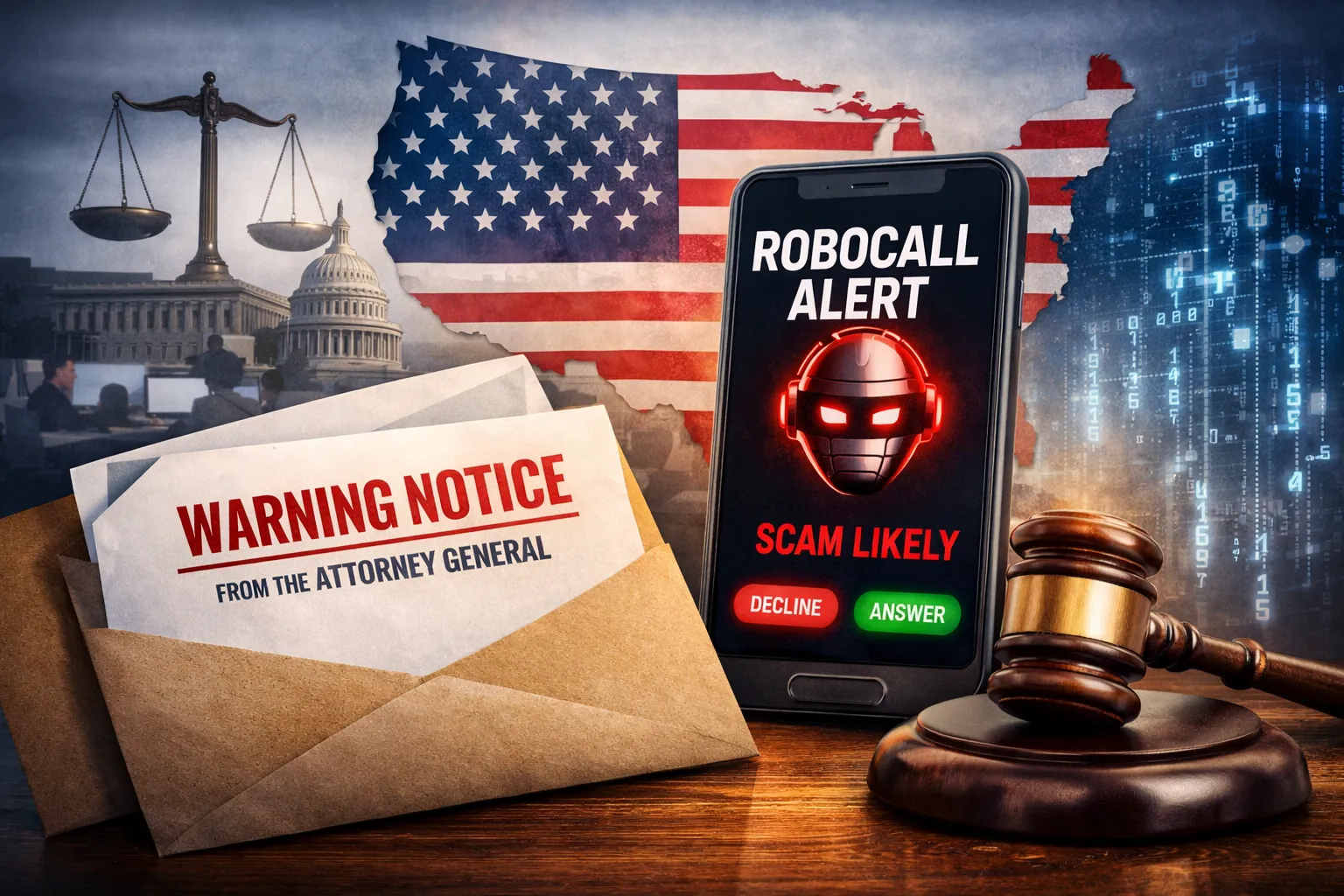
If you answer your phone in America, you know the feeling.
An unknown number.
A robotic voice.
A message about your car warranty or student loans.
That frustration is exactly why attorneys general robocall warning letters exist.
These letters are not random threats.
They are legal signals.
And they matter to both consumers and businesses across the United States.
Based on research and guidance from U.S. regulators, these warning letters play a growing role in robocall enforcement.
Why Robocalls Became a National Problem
Robocalls exploded over the last decade.
Cheap software and VoIP technology made mass calling easy.
Scammers took advantage fast.
According to data shared by the Federal Communications Commission, Americans receive billions of robocalls every month.
Many are illegal.
Many are scams.
I have personally received fake IRS calls and medical insurance pitches.
Most people I know have similar stories.
This volume forced state and federal officials to act.
What Are Attorneys General Robocall Warning Letters?
Attorneys general robocall warning letters are formal notices sent by state attorneys general.
They target companies suspected of illegal robocalling practices.
These letters usually come before lawsuits.
Think of them as a yellow card, not a red one.
They typically warn about violations of laws like:
-
The Telephone Consumer Protection Act (TCPA)
-
State consumer protection statutes
-
Do Not Call regulations
According to enforcement actions reported by the Federal Trade Commission, warning letters often lead to compliance changes without court action.
Who Sends These Warning Letters?
Every U.S. state has an attorney general.
They protect residents from unfair or deceptive practices.
Attorneys general often work together.
Multi-state investigations are common in robocall cases.
For example, several states have coordinated crackdowns after large robocall campaigns.
These efforts are often announced publicly to deter other offenders.
According to analysis published by Forbes, joint enforcement sends a stronger signal than single-state action.
What Triggers an Attorney General’s Robocall Warning Letter?
These letters are not sent casually.
Several red flags can trigger them.
Common Triggers Include:
-
High consumer complaint volumes
-
Calls to numbers on the National Do Not Call Registry
-
Spoofed caller ID numbers
-
Robocalls without consent
-
Misleading prerecorded messages
The National Do Not Call Registry, managed by the FTC, plays a major role.
Complaints filed there often start investigations.
Real-Life Example: How a Business Gets Flagged
Imagine a small U.S. marketing firm.
They buy a cheap calling list online.
They run a prerecorded sales campaign.
Within weeks, hundreds of complaints hit state offices.
Phones ring during dinner hours.
People get angry.
That company may receive attorneys general robocall warning letters first.
Ignoring them can lead to lawsuits, fines, and shutdowns.
What Happens After a Warning Letter Is Sent?
A warning letter demands action.
It usually requests documents and explanations.
Typical requests include:
-
Call logs
-
Consent records
-
Vendor contracts
-
Robocall scripts
Based on FTC enforcement patterns, failure to respond increases legal risk.
Prompt cooperation often reduces penalties.
I have seen cases where businesses avoided lawsuits by stopping campaigns immediately.
Comparison: Warning Letter vs Lawsuit
| Feature | Warning Letter | Lawsuit |
|---|---|---|
| Cost (USA) | $0–$5,000 (legal review) | $50,000+ in legal fees |
| Public Record | Sometimes | Always |
| Flexibility | High | Very limited |
| Time to Respond | Days or weeks | Months or years |
| Best For | Early compliance | Punishment and deterrence |
For businesses, a warning letter is the safer stage to act.
How Consumers Benefit From These Warning Letters
Consumers rarely see the letters directly.
But the impact is real.
Warning letters:
-
Stop illegal call campaigns quickly
-
Reduce scam call volume
-
Pressure telecom providers to block bad actors
According to reports referenced by the NerdWallet, aggressive enforcement reduces scam losses for seniors and vulnerable groups.
That matters.
Robocalls cost Americans billions annually.
What Businesses Should Do If They Receive One
If your business receives an attorneys general robocall warning letter, do not panic.
But do not ignore it.
Step-by-Step Guidance:
-
Contact a U.S.-licensed attorney immediately.
-
Pause all outbound robocall campaigns.
-
Review consent records carefully.
-
Respond honestly and promptly.
-
Implement compliance changes fast.
According to Investopedia’s analysis of TCPA enforcement, proactive fixes often prevent lawsuits.
Common Myths About Robocall Warning Letters
Many businesses misunderstand these letters.
Myth: Only scammers get them.
Reality: Legit businesses can be flagged accidentally.
Myth: One letter means automatic fines.
Reality: Fines usually follow non-compliance.
Myth: Small businesses are ignored.
Reality: Size does not protect you.
State attorneys general focus on consumer harm, not company size.
How Robocall Laws Are Evolving in the U.S.
Robocall enforcement is getting tougher.
Technology is improving.
Tracing illegal calls is easier now.
The FCC’s call authentication rules, like STIR/SHAKEN, help identify spoofing.
States rely on these tools when issuing warning letters.
Based on recent regulatory updates, expect more attorneys general robocall warning letters, not fewer.
Practical Tips for U.S. Consumers
Consumers play a role too.
-
Register your number with the Do Not Call Registry.
-
Report robocalls consistently.
-
Do not press buttons on scam calls.
-
Use carrier call-blocking tools.
Consumer complaints are the fuel behind enforcement.
FAQs About Attorneys General Robocall Warning Letters
What are attorneys general robocall warning letters?
They are formal notices warning companies about suspected illegal robocalling activities.
Can a warning letter turn into a lawsuit?
Yes. Ignoring or violating terms can lead to lawsuits and heavy penalties.
Do attorneys general robocall warning letters affect small businesses?
Yes. Small businesses can receive them if complaints or violations occur.
How fast must a company respond to a warning letter?
Most letters require responses within days or weeks, depending on the state.
Do these letters actually reduce robocalls?
According to U.S. regulators, warning letters often stop illegal campaigns quickly.