Quick answer
AI chatbots generate responses using patterns learned during training and information available in the current conversation. A language model typically builds text one token at a time; it does not automatically verify every statement. Some chatbot systems also retrieve documents or search the web. Confident wording is not proof of accuracy: check important claims against the underlying evidence. (learn.microsoft.com)
1. What a language model actually does
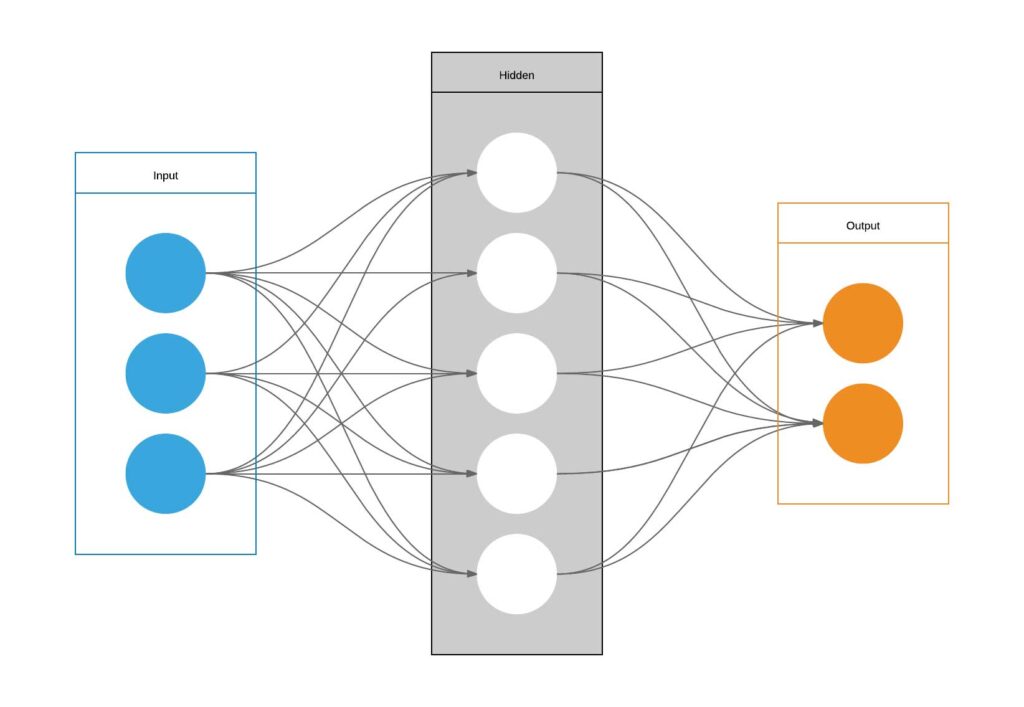
A large language model, or LLM, is a neural network—a mathematical system with numerical settings learned during training. For text generation, it predicts possible continuations from the text available to it. Those predictions can produce useful explanations, summaries and answers, but they are not themselves a fact-checking process. (learn.microsoft.com)
The building blocks are tokens, not necessarily whole words. A token might be a word, part of a word, punctuation or a character. Tokenization means splitting text into these units. The exact split depends on the tokenizer, so “one token equals one word” is not a reliable rule. (docs.cloud.google.com)
Keep two things separate when using a chatbot:
- The response: the explanation or answer it produces.
- The evidence: the document, observation or calculation that supports a claim.
Ask for both when accuracy matters. A readable explanation helps you understand an answer; supporting evidence helps you decide whether to rely on it.

2. Training and inference are different stages
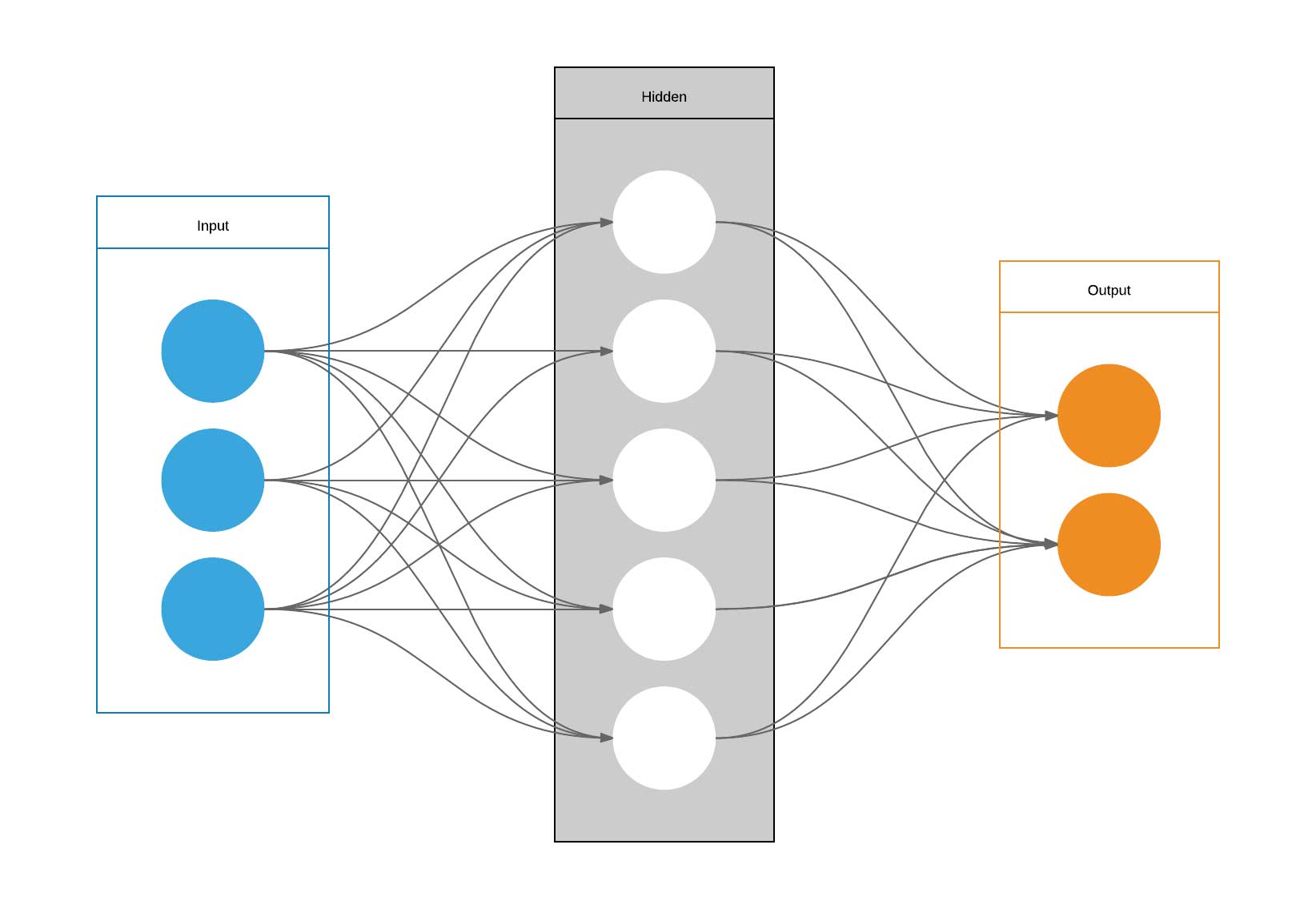
Training adjusts a model’s internal numerical settings, called parameters. During pretraining, a text model learns patterns by predicting tokens across large amounts of material. These patterns support its ability to generate language and respond to questions. (learn.microsoft.com)
Additional training can shape how a model behaves as an assistant. For example, the InstructGPT research used demonstrations of desired responses followed by human rankings of outputs. This improved instruction-following and other evaluated qualities, but the researchers also reported that the resulting models still made simple mistakes. That paper describes a particular approach, not the exact training process of every chatbot. (arxiv.org)
Inference is the stage when a trained model processes your request and produces an output. In a typical text-generation process, it:
- Processes the available input.
- Calculates probabilities for possible next tokens.
- Selects a token.
- Continues until the response ends or reaches a limit. (learn.microsoft.com)
Adding instructions or a passage to your prompt changes the input for that response. It does not, by itself, directly update the model’s learned parameters. (docs.cloud.google.com)
This distinction matters when correcting an answer. Say, “Use the corrected date in this summary,” rather than assuming your correction has permanently retrained the system.
3. Generating an answer is not the same as retrieving information
A chatbot may answer from learned patterns, use supplied documents, or access external information through connected tools. These are different routes to an answer. (docs.cloud.google.com)
| Route | What happens | What you should check |
|---|---|---|
| Generation from learned patterns | The model produces text without a fresh source lookup | Find independent evidence for important factual claims |
| Supplied-document answer | The model uses material included in the request | Compare the answer with the actual passage |
| Retrieval-assisted answer | A system finds relevant material and provides it to the model | Open the sources and check whether they support the claims |
Retrieval-augmented generation, usually shortened to RAG, combines retrieval with generation: find relevant information, add it to the model’s input, then generate a response. Grounding means connecting output to verifiable information. These techniques can reduce hallucinations; they are not a guarantee that every resulting sentence is correct. (docs.cloud.google.com)
For practical use, ask: “What evidence supports this particular sentence?” Avoid settling for a general bibliography at the bottom of a long answer.
When checking a retrieved answer, inspect the publication date, relevant passage and scope. A page about one product version, location or group may not establish a claim about another. Treat source checking as part of the task, not an optional final polish.
4. Why confident mistakes happen—and what a cutoff means
An AI hallucination is generated content that is false or unsupported while appearing plausible. Examples include invented references, incorrect dates and fabricated quotations. The term describes an output error; it should not be read as a claim about human-like perception or intention. (help.openai.com)
One reason mistakes persist is that learning statistical patterns does not establish every individual fact. A model may produce a plausible detail where the evidence is missing or insufficient. The 2025 paper Why Language Models Hallucinate analyzes statistical sources of error and argues that common training and evaluation incentives can encourage guessing rather than acknowledging uncertainty. This is a research explanation of important mechanisms, not a complete diagnosis of every wrong answer. (arxiv.org)
A knowledge cutoff is another limitation. Training covers information available up to some point; later events require additional information, such as supplied material or tool results. But a cutoff is not a promise that everything earlier is known correctly. Models can make mistakes about older facts too. (help.openai.com)
Use these distinctions when troubleshooting:
- A recent fact: seek a current official source.
- A claim about your document: compare it with that document.
- A calculation: recompute it independently.
- A confident but unsupported detail: leave it unverified rather than accepting the tone.
5. Worked example: checking a fictional chatbot answer
Consider this invented, nonsensitive exercise. Neither the notice nor the response below comes from a real organization or recorded chatbot test.
Your prompt
Use this fictional notice: “The Cedar Learning Club’s poster workshop is on 18 November, from 14:00 to 16:00. There are 24 places. Each booking may reserve up to two places. The notice does not state a fee.”
Summarize the event and calculate the minimum number of bookings needed to fill it.
An illustrative flawed response
The free workshop runs for three hours on 18 November. Twelve bookings will fill all 24 places.
The response is short and convincing. Check each claim separately:
| Claim | Check | Verdict |
|---|---|---|
| The workshop is free | The notice does not state a fee | Unsupported |
| It lasts three hours | 16:00 minus 14:00 is two hours | Incorrect |
| It takes place on 18 November | Compare with the supplied notice | Supported within the exercise |
| Twelve bookings fill 24 places | 24 ÷ 2 = 12 | Correct only if each booking reserves two places |
A corrected answer would be:
The workshop is on 18 November, from 14:00 to 16:00, lasting two hours. It has 24 places, with up to two places per booking. The minimum is 12 bookings if every booking reserves two places. The fee is not specified.
Notice the difference between minimum bookings and any 12 bookings. Twelve one-place bookings would not fill the workshop.
Also separate checking a summary from verifying a real-world event. In this exercise, matching the supplied notice is enough. For an actual event, you would still need to establish that the notice is authentic and current before acting on it.
A useful follow-up prompt is:
Separate your response into stated facts, calculations with assumptions, and details not specified. Do not infer that a missing fee means the event is free.
Use that prompt to organize the review—not as a replacement for doing it.
6. A verification checklist for everyday use
Before sharing or acting on an answer, work through this checklist:
- Identify the claims. Underline names, dates, quantities, quotations and factual assertions. Check claims individually rather than judging the paragraph as a whole.
- Choose the appropriate evidence. Use an organizer’s notice for an event, official documentation for a feature, and the original research paper for a research finding.
- Open the cited source. Locate the passage that supports the claim. Check that the title and author match the reference.
- Check scope and timing. Record which version, location, population or period the evidence concerns.
- Recalculate numbers. Write down the inputs, units and assumptions. Then use a calculator or spreadsheet where appropriate.
- Label what remains uncertain. Use “not specified,” “not verified” or “depends on this assumption” instead of filling gaps.
- Match the review to the consequences. For consequential decisions, seek appropriate qualified review rather than relying on a chatbot alone.
This workflow follows the broader principle of treating AI output as a draft and checking important information, especially quotations, data and references, against reliable sources. (help.openai.com)
For a quick record, use three columns: claim / evidence / status. That makes unresolved questions visible before the answer is copied into an assignment, presentation or message.


7. Common mistakes—and a short independent-thinking exercise
Mistake: asking only “Are you sure?”
Instead, request the supporting passage and inspect it yourself. Confidence is not reliability. (help.openai.com)
Mistake: repairing wording before checking facts.
First resolve dates, quantities and unsupported details. Then improve the writing. Do not spend time polishing a sentence you may need to remove.
Mistake: using an unclear task.
State the source boundary and desired output. For example: “Summarize only this notice. Put missing details under ‘Not specified.’” Clear instructions and examples can help guide output, but they still require evaluation. (docs.cloud.google.com)
Mistake: letting the first answer define the whole investigation.
Before prompting, write down what you need to establish. Keep room to revise the question when evidence challenges your starting assumption.
Try this exercise without a chatbot:
“The poster workshop is free, lasts two hours, and is the club’s most popular event.”
Which claims can the fictional notice establish?
- Two hours: supported by its stated times.
- Free: not established.
- Most popular: not established; it needs a definition of popularity and comparative evidence.
The practical goal is not to distrust every AI sentence. It is to distinguish a useful explanation from a verified claim—and know what to check next.