You’re walking through a grocery store.
Your foot hits a wet spot with no warning sign.
You go down hard, and suddenly you’re in the ER.
Now medical bills are stacking up.
The store’s insurance company calls, sounding “helpful,” but offers very little.
This is exactly when a premises liability lawyer can change everything.
In plain terms, premises liability means property owners must keep their places reasonably safe.
When they don’t, and you get hurt, you may have a legal claim.
A good lawyer helps you prove what happened, deal with insurers, and seek fair compensation.
What Is Premises Liability in Simple Terms?
Premises liability is about unsafe property conditions.
Think of places you visit every week:
- Stores and shopping malls
- Apartment complexes and condos
- Office buildings and parking garages
- Hotels, restaurants, bars, and movie theaters
- Private homes and yards
If the owner or manager knew (or should have known) about a danger and didn’t fix it or warn you, they may be responsible for your injuries.
Common examples include:
- Slip and falls on spills, ice, or loose rugs
- Trips on broken steps, cracked sidewalks, or cluttered walkways
- Poor lighting in stairwells or parking lots
- Negligent security leading to assaults or robberies
- Unsafe pools, decks, or balconies
- Dog bites on the owner’s property
According to the Centers for Disease Control and Prevention (CDC), millions of Americans are treated for fall injuries every year, and falls are a leading cause of injury-related ER visits for older adults (cdc.gov). Those aren’t just “clumsy moments.” They’re often preventable hazards.
When You Should Call a Premises Liability Lawyer
You don’t need a lawyer for every stubbed toe.
But some warning signs mean you should at least get a free consultation.
Common Situations Where a Lawyer Really Helps
You should consider calling a premises liability lawyer if:
- You needed emergency care, X‑rays, or follow-up treatment
- You missed work or lost income because of your injury
- The property owner or manager blames you right away
- Insurance adjusters call quickly, pushing you to settle fast
- There’s security footage or witnesses you can’t access alone
Here’s a real-world style scenario.
You fall on icy steps outside your apartment in Ohio.
You had previously emailed your landlord about the ice.
They never salted the steps or blocked off the area.
Now your ankle is broken, and you can’t work for weeks.
In that situation, a premises liability lawyer can:
- Preserve video or maintenance records
- Track down neighbors who complained about the same hazard
- Show the landlord had “notice” of the danger
- Calculate lost wages and future medical needs
Time Limits Matter
Every state has a deadline to file an injury lawsuit.
These are called statutes of limitations.
For example:
- In California, many personal injury claims must be filed within two years.
- In New York, most have a three-year deadline.
If you miss your state’s deadline, your claim is usually gone.
A lawyer helps you avoid that painful surprise.
How a Premises Liability Lawyer Builds Your Case
You might picture a lawyer only arguing in court.
In reality, lots of the important work happens long before that.
Here’s what a good premises liability lawyer usually does:
- Free consultation and case review
They listen to your story, ask questions, and give an honest opinion.
Many will tell you plainly if your case is weak or strong. - Investigation
They gather photos, video, incident reports, and 911 records.
They may send investigators to measure, inspect, and photograph the scene. - Proving the owner was negligent
They look for maintenance logs, prior complaints, or code violations.
The goal is showing the owner failed to act reasonably. - Documenting your damages
This includes medical records, bills, pay stubs, and expert opinions.
According to Healthcare.gov, a three-day hospital stay can cost around $30,000, even before follow-up care (healthcare.gov). Those numbers matter in negotiations. - Dealing with the insurance company
They handle calls, letters, and lowball offers so you don’t have to.
You can focus on healing while they argue the value of your claim. - Negotiation and, if needed, litigation
Many premises cases settle out of court.
But if the insurer refuses to be fair, your lawyer can file a lawsuit.
I often see people wait too long, trying to “be nice” or “handle it.”
By the time they reach out, key evidence is gone.
That’s one big reason quick legal advice can be so important.
What Does a Premises Liability Lawyer Cost?
Most premises liability lawyers work on a contingency fee.
That means they only get paid if you recover money.
According to Investopedia, contingency fees in personal injury cases are often around 33%–40% of the settlement or verdict amount, depending on the stage of the case (investopedia.com). Always ask about the exact percentage and any additional costs.
Here’s a simple comparison:
| Feature | Handle Claim Yourself | Hire Premises Liability Lawyer |
|---|---|---|
| Upfront cost | Usually $0 | Usually $0 (contingency fee) |
| Time spent by you | Very high | Moderate (mostly answering questions) |
| Access to evidence and records | Limited | Broader, through legal tools and subpoenas |
| Negotiation experience | Low | High, deals with insurers every day |
| Typical settlement leverage | Lower | Higher, especially on serious injuries |
| Best for | Very minor injuries | Moderate to serious injuries, disputed cases |
For many people, the real question is simple.
Will a lawyer likely increase your net result even after fees?
In more serious cases, the answer is often yes.
How to Choose the Right Premises Liability Lawyer
Not every personal injury lawyer focuses on premises cases.
You want someone who actually handles these claims regularly.
Here are smart questions to ask during a free consultation:
- How many premises liability cases have you handled recently?
- Have you taken any to trial, or do you mostly settle?
- Do you have experience with cases like mine, such as falls or security issues?
- How do you update clients about their case progress?
- What percentage do you charge, and does it change if we go to trial?
Also trust your gut.
Did the lawyer listen, or just rush you toward signing forms?
Did they explain things in plain English, or use confusing jargon?
You’re not just hiring a legal mind.
You’re hiring a partner for a stressful part of your life.
Practical Tips If You’re Hurt on Someone Else’s Property
If you’re injured, these steps can help protect you and your claim:
- Get medical help immediately. Even if pain seems minor at first.
- Report the incident to the manager, owner, or landlord right away.
- Take photos and video of the scene, hazard, and your injuries.
- Collect witness names and contact info, if possible.
- Avoid giving detailed statements to the property’s insurance company.
- Stay off social media about the accident; posts can be used against you.
- Call a local premises liability lawyer for a free case review.
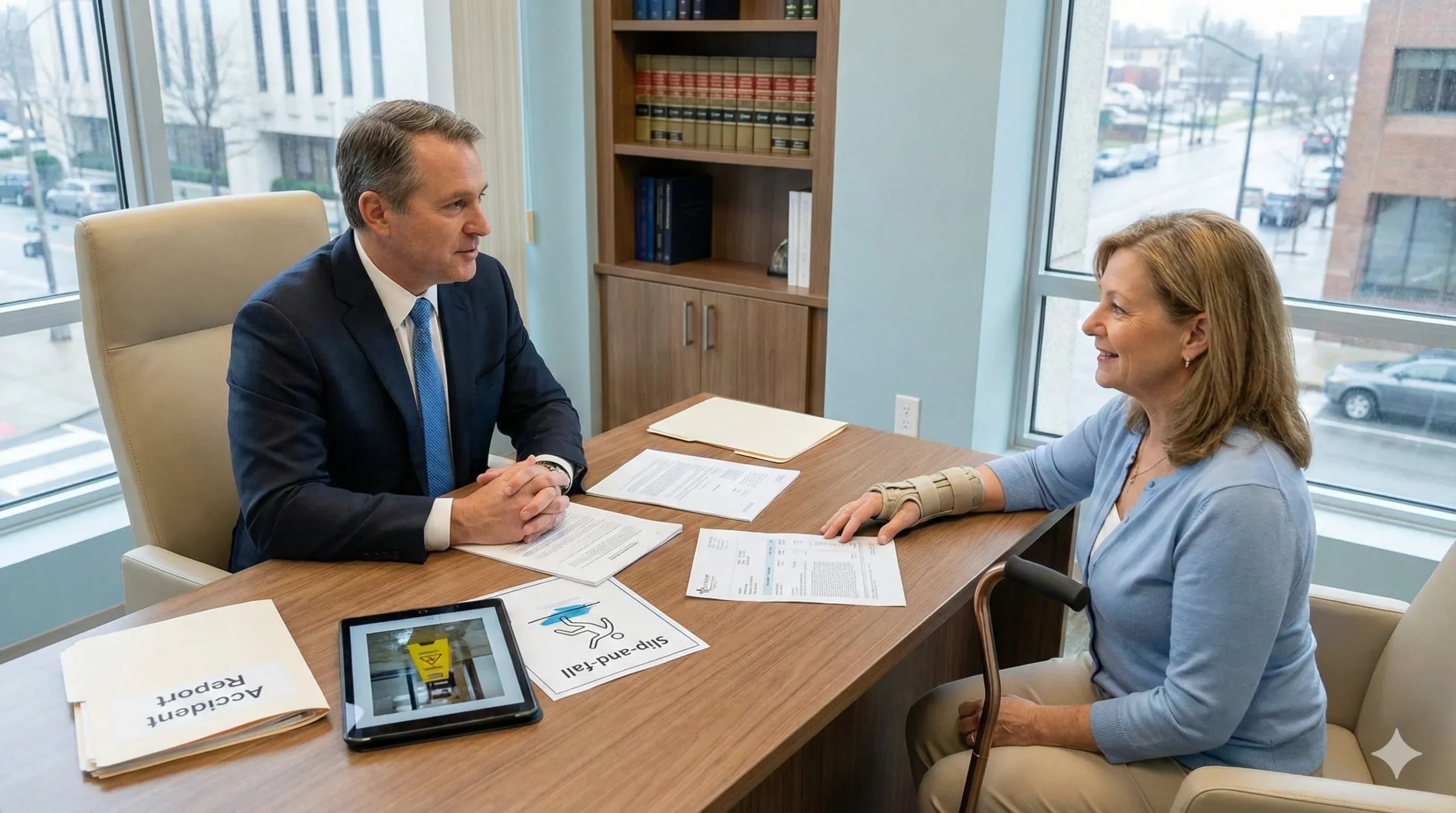
[Image alt text suggestion: injured shopper meeting with a premises liability lawyer in a small U.S. law office, reviewing medical bills and accident photos.]
Premises Liability Lawyer FAQs
1. What does a premises liability lawyer actually do day to day?
A premises liability lawyer investigates your accident, gathers evidence, and proves negligence.
They deal with insurers, calculate your damages, and negotiate or litigate for compensation.
2. When should I hire a premises liability lawyer after a slip and fall?
Hire one as soon as possible after getting medical care.
Evidence disappears quickly, and insurance companies move fast to limit payouts.
3. How much does a premises injury lawyer cost upfront?
Usually nothing upfront.
Most work on contingency, taking a percentage of your settlement or verdict.
If you recover nothing, they typically do not get paid a fee.
4. Can I win a premises liability case if I was partly at fault?
Often yes, depending on your state’s comparative negligence rules.
Your compensation may be reduced by your percentage of fault, but not eliminated.
5. How long does a premises liability case take to settle?
Simple claims may settle in a few months.
More serious or disputed cases can take a year or longer, especially if a lawsuit is filed.