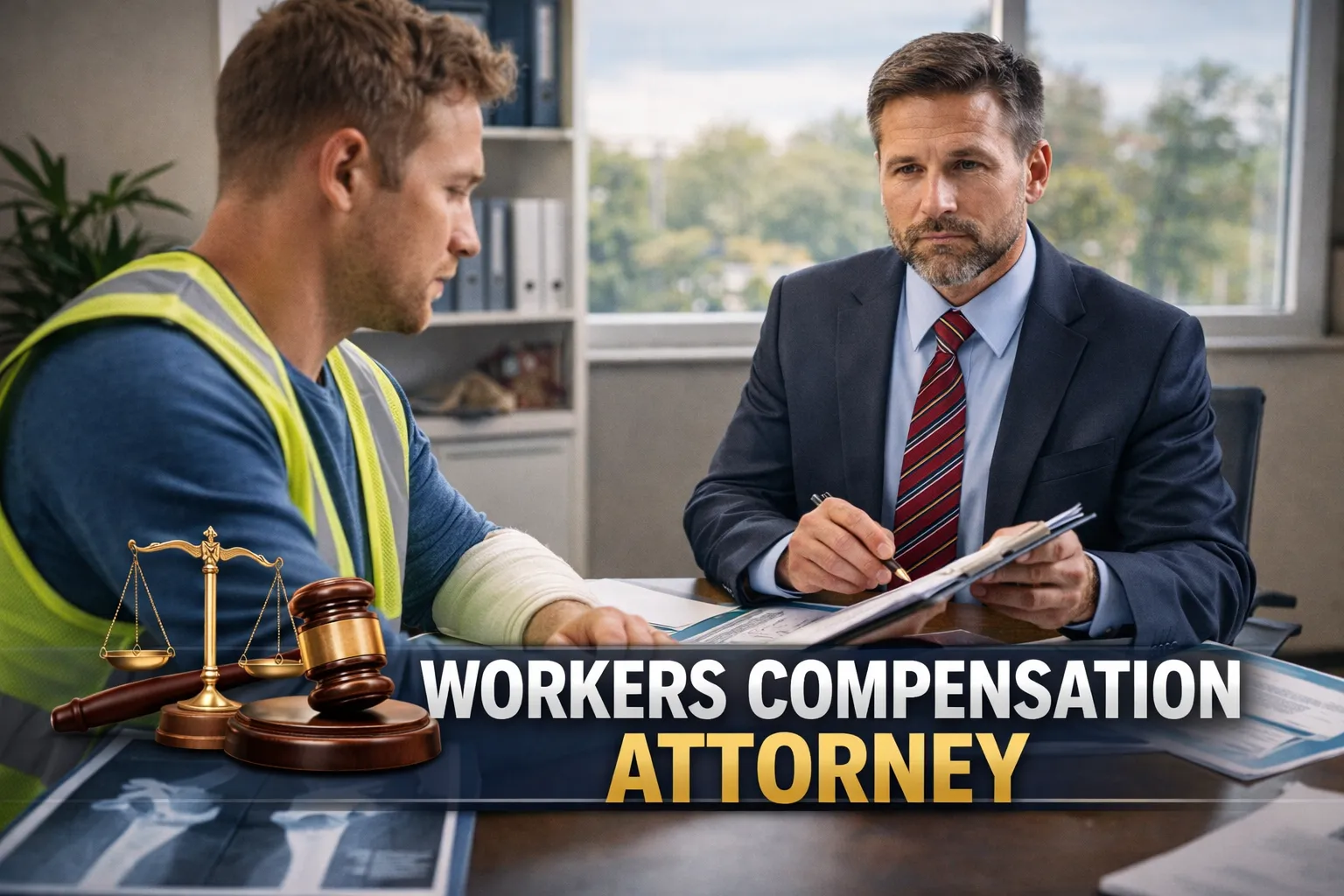
Getting hurt at work can flip your life overnight.
Pain shows up first.
Bills arrive soon after.
That’s where a workers compensation attorney becomes important.
Many U.S. workers don’t realize how complex claims can become.
I didn’t either, until I watched a coworker struggle for months.
This article explains how a workers compensation attorney helps.
It focuses on real U.S. workplaces, rules, and everyday situations.
What Is a Workers Compensation Attorney?
A workers compensation attorney helps injured employees get benefits.
These benefits come from state-mandated workers’ compensation systems.
Every U.S. state requires most employers to carry workers’ comp insurance.
That coverage pays medical bills and partial lost wages.
Sounds simple, right?
In practice, it rarely is.
Employers and insurers often dispute claims.
That’s where legal experience matters most.
Why Workers’ Comp Claims Get Denied in the U.S.
Denials happen more often than people expect.
Even legitimate injuries face pushback.
Common denial reasons include:
-
Employer disputes how the injury happened
-
Missed deadlines for reporting injuries
-
Claims that injury was pre-existing
-
Lack of medical documentation
According to data from the U.S. Bureau of Labor Statistics, millions of workplace injuries occur yearly.
Yet many claims never receive full benefits.
A workers compensation attorney knows how to counter these denials.
They understand state-specific rules and appeal processes.
When You Should Call a Workers Compensation Attorney
Not every claim needs a lawyer.
Some cases settle smoothly.
Others don’t.
You should strongly consider legal help if:
-
Your claim gets denied
-
Benefits suddenly stop
-
You’re forced back to work too early
-
Your injury causes permanent limitations
I’ve seen warehouse workers pushed to return with broken bones.
Legal intervention stopped that quickly.
How a Workers Compensation Attorney Helps Step by Step
Step 1: Claim Review and Strategy
An attorney reviews accident reports and medical records.
They spot weak points insurers exploit.
They also explain realistic benefit expectations.
That clarity reduces stress early.
Step 2: Medical Evidence Coordination
Doctors play a huge role in workers’ comp cases.
Insurers often rely on “independent medical exams.”
A workers compensation attorney helps challenge biased opinions.
They ensure your treating doctor’s voice is heard.
According to guidance from Investopedia, medical documentation strongly impacts claim outcomes.
Step 3: Negotiation and Appeals
Most disputes resolve through negotiation or hearings.
Few cases reach full trials.
Your attorney handles filings, deadlines, and hearings.
You focus on recovery.
Workers Compensation Attorney vs Handling the Claim Alone
Here’s a simple comparison for injured U.S. workers.
| Feature | Handling Alone | Workers Compensation Attorney |
|---|---|---|
| Upfront cost | $0 | $0 in most cases |
| Legal knowledge | Limited | Expert-level |
| Stress level | High | Lower |
| Denial appeal success | Low | Much higher |
| Best for | Minor injuries | Serious or disputed claims |
Most attorneys work on contingency fees.
That means payment only if benefits increase.
According to Forbes, workers’ comp attorney fees are regulated by state law.
This protects injured workers from excessive costs.
How Much Does a Workers Compensation Attorney Cost?
Cost fears stop many people from calling.
They shouldn’t.
In most states:
-
No upfront fees
-
Fees range from 10% to 25% of recovered benefits
-
Fees require state approval
This system keeps attorneys focused on results.
It also protects injured workers financially.
How Long Workers’ Comp Cases Usually Take
Timelines vary widely.
Minor injuries may resolve in weeks.
Complex cases can last months or years.
Permanent disability cases take the longest.
NerdWallet reports that rushing settlements often leads to lower payouts.
Patience often protects long-term income and healthcare needs.
Choosing the Right Workers Compensation Attorney
Not all attorneys specialize in workers’ comp.
Specialization matters a lot here.
Look for these traits:
-
Focus on workers’ compensation law
-
Experience in your specific state
-
Clear communication style
-
Strong client reviews
Local experience matters.
State laws differ dramatically across the U.S.
Common Mistakes Injured Workers Make
These mistakes hurt claims fast:
-
Waiting too long to report injuries
-
Giving recorded statements without advice
-
Ignoring follow-up medical care
-
Trusting insurer-friendly doctors
Wikipedia notes that workers’ compensation laws vary by jurisdiction.
Small mistakes can cause permanent benefit loss.
Image Alt Text Description (For SEO Use)
Alt text suggestion:
“Workers compensation attorney consulting with injured employee in a U.S. workplace office setting, discussing medical benefits and legal paperwork.”
FAQs About Workers Compensation Attorneys
1. Do I need a workers compensation attorney for a minor injury?
Not always.
But legal advice helps if benefits seem limited or delayed.
2. How soon should I contact a workers compensation attorney?
As soon as problems appear.
Early guidance prevents costly mistakes.
3. Can a workers compensation attorney help if my claim is denied?
Yes.
Appeals and hearings are a major part of their work.
4. Will hiring a workers compensation attorney upset my employer?
Legally, employers cannot retaliate.
Most disputes involve insurers, not supervisors.
5. Can a workers compensation attorney increase my settlement?
Often, yes.
They identify missed benefits and challenge unfair evaluations.